From research to prototype: laying the groundwork for the public engagement platform
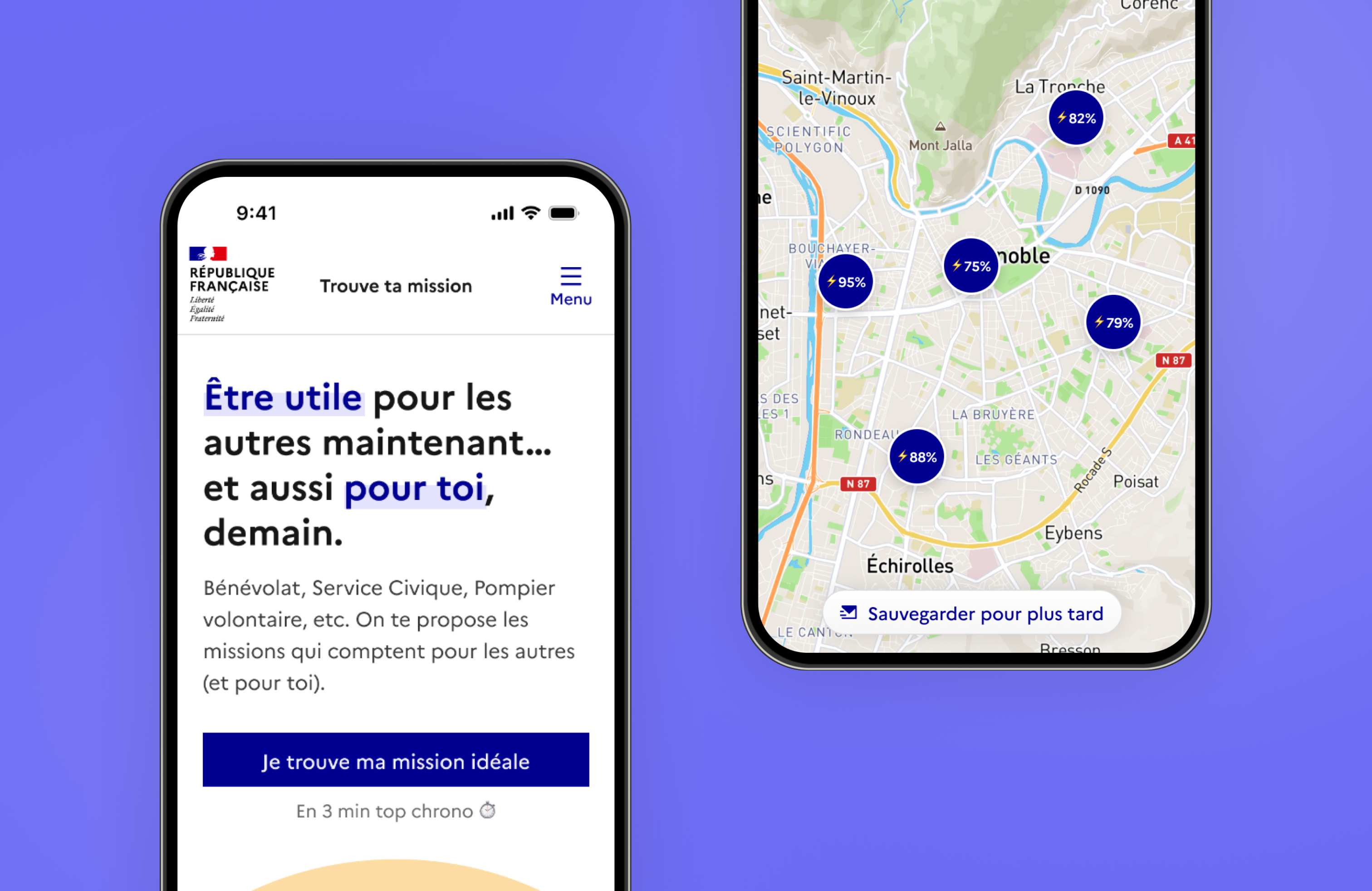
3 months of research, prototyping and testing to imagine the public service that recommends civic engagement missions to young people.
Industry
Public service - Civic engagement
Role
Product Designer, paired with a Product Manager
Year
2025
Making civic engagement clear to young people
Volunteering, Civic Service, military reserve, volunteer firefighters… Civic engagement drives inclusion, employability and skills. But it takes many forms, spread across many programs, and the general public, especially young people, knows little about them.
For the API Engagement team, I worked for 3 months paired with a Product Manager, alongside the project’s intrapreneur and the deployment team. Our goal: understand why young people get involved, or don’t, then prototype and test a service to help them.
30
exploratory interviews
15 young people and 15 mentors
Listening to young people, and to those who support them
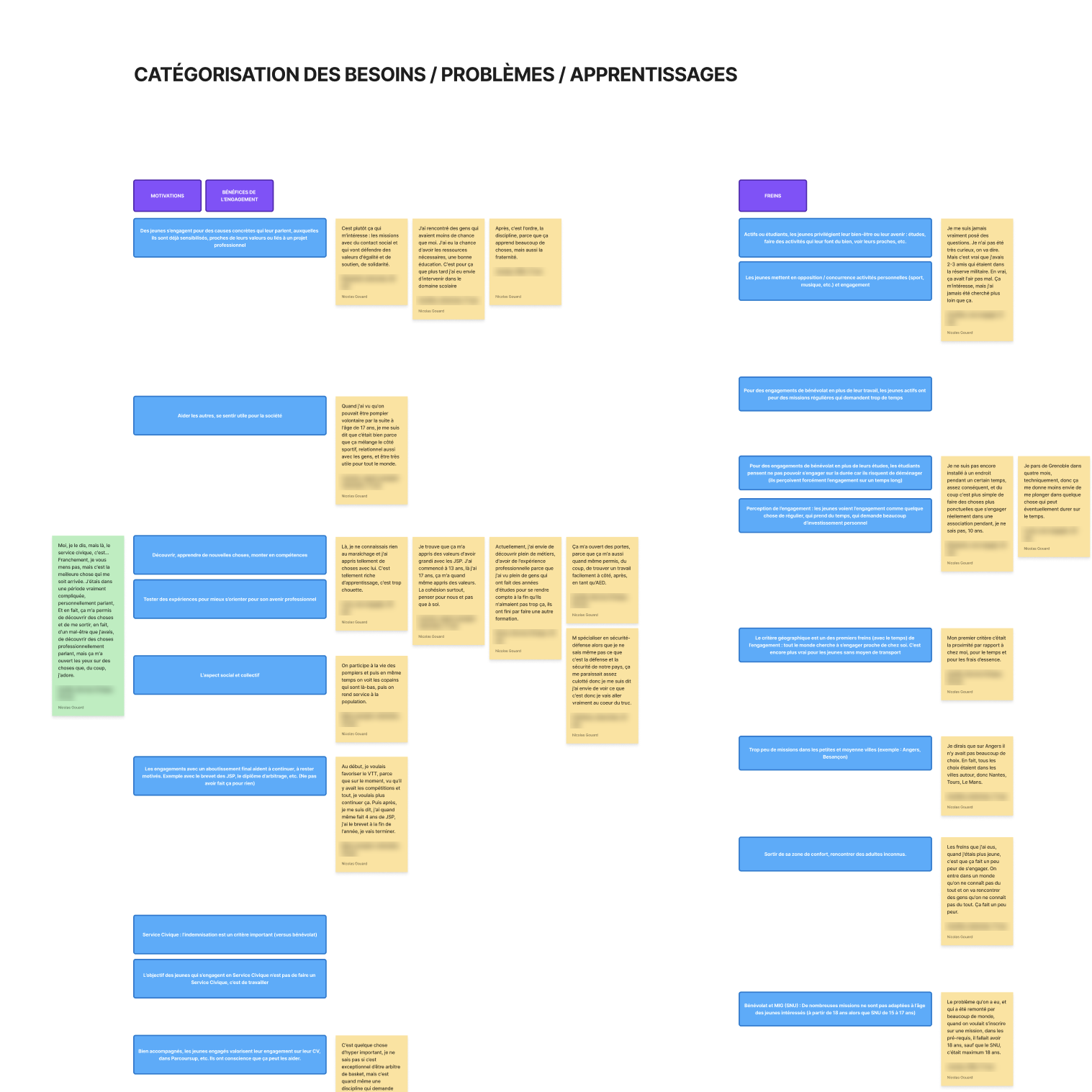
I framed the research: what we wanted to learn (young people’s motivations, barriers and engagement journeys), who to talk to, and how, with one-hour exploratory interviews followed by a qualitative analysis.
We interviewed three audiences:
- young people aged 16 to 30, engaged or not, the main focus of the research;
- organizations publishing opportunities, which offer missions and want to recruit, interviewed by the deployment team;
- mentors, a secondary audience we identified in our first interviews with young people: France Travail and Youth Engagement Contract advisors, teachers, specialized youth workers…
The Product Manager and I led the interviews with young people and mentors. Each one was transcribed and summarized with AI, before we analyzed the whole set, both collectively and with the help of AI assistants.
Little-known programs, for young people and for those who guide them
We prioritized 9 problems we could act on:
- for young people: they know little about the engagement programs open to them, don’t always see how engagement can help their path, and don’t all have the same access to opportunities depending on their situation;
- for organizations publishing opportunities: they struggle to reach the right candidates at the right time, to make their programs clear without heavy communication efforts, and to handle surges of applications;
- for mentors: they aren’t trained and lack the resources to know and present the programs that could help young people.
We shared these learnings and our recommendations with the intrapreneur and the team.
A vision: the go-to public service for civic engagement
For our two priority audiences, we wrote a value proposition:
- for young people: discover engagement opportunities suited to their profile, their area and their stage of life, across every public program;
- for mentors: easily guide young people toward the most relevant programs, without needing to know each one in detail.
That’s when we decided to build a platform: the go-to public service for recommending and sharing engagement opportunities in France, built on three pillars.
- 1
A unified database
Every public engagement opportunity, up to date, all presented in the same mission format.
VolunteeringCivic ServiceMilitary reserveVolunteer firefighters… - 2
A recommendation engine
Missions personalized to each young person's constraints and aspirations.
⚡ 90% affinity - 3
A wide distribution network
From the service's own site to the platforms young people already use.
Own websitePartner platforms
A working prototype to test the vision
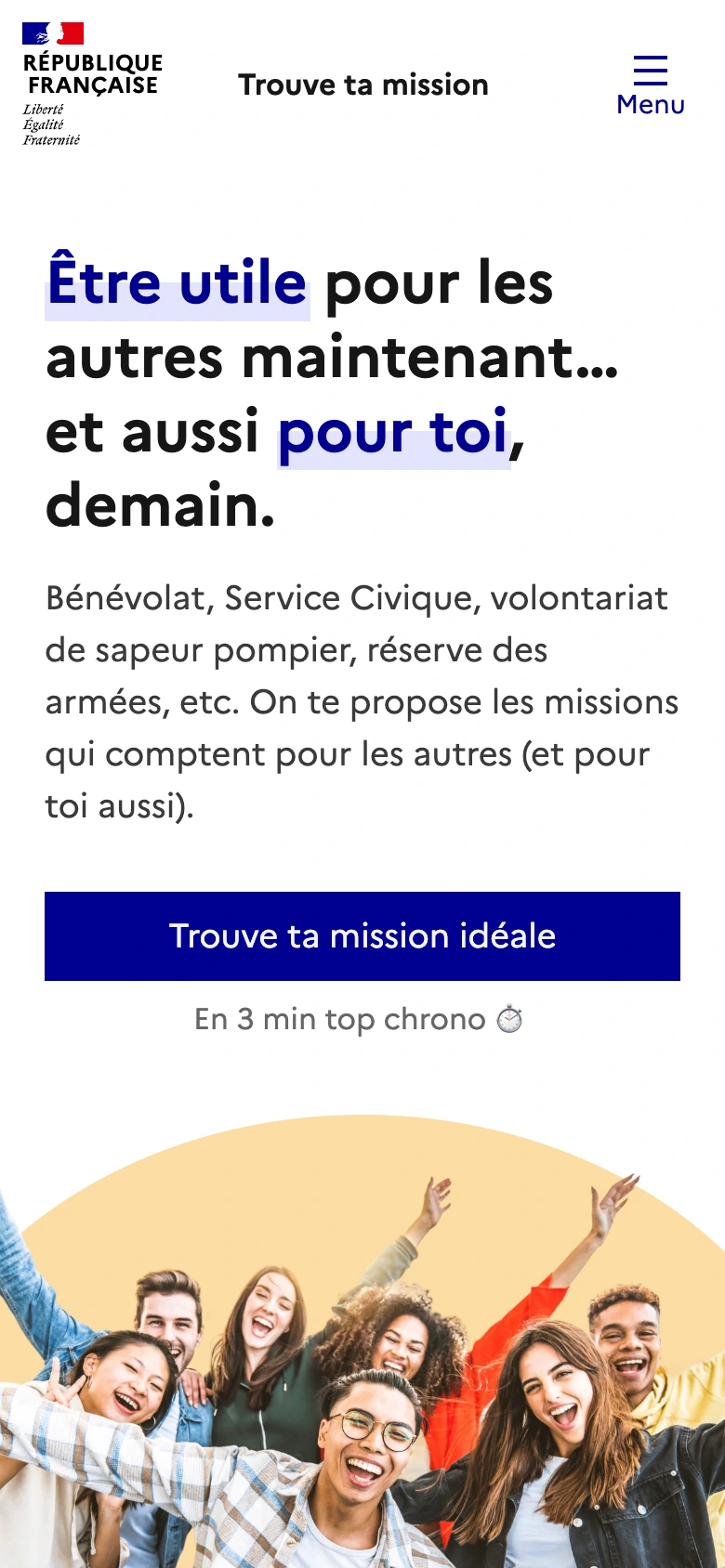
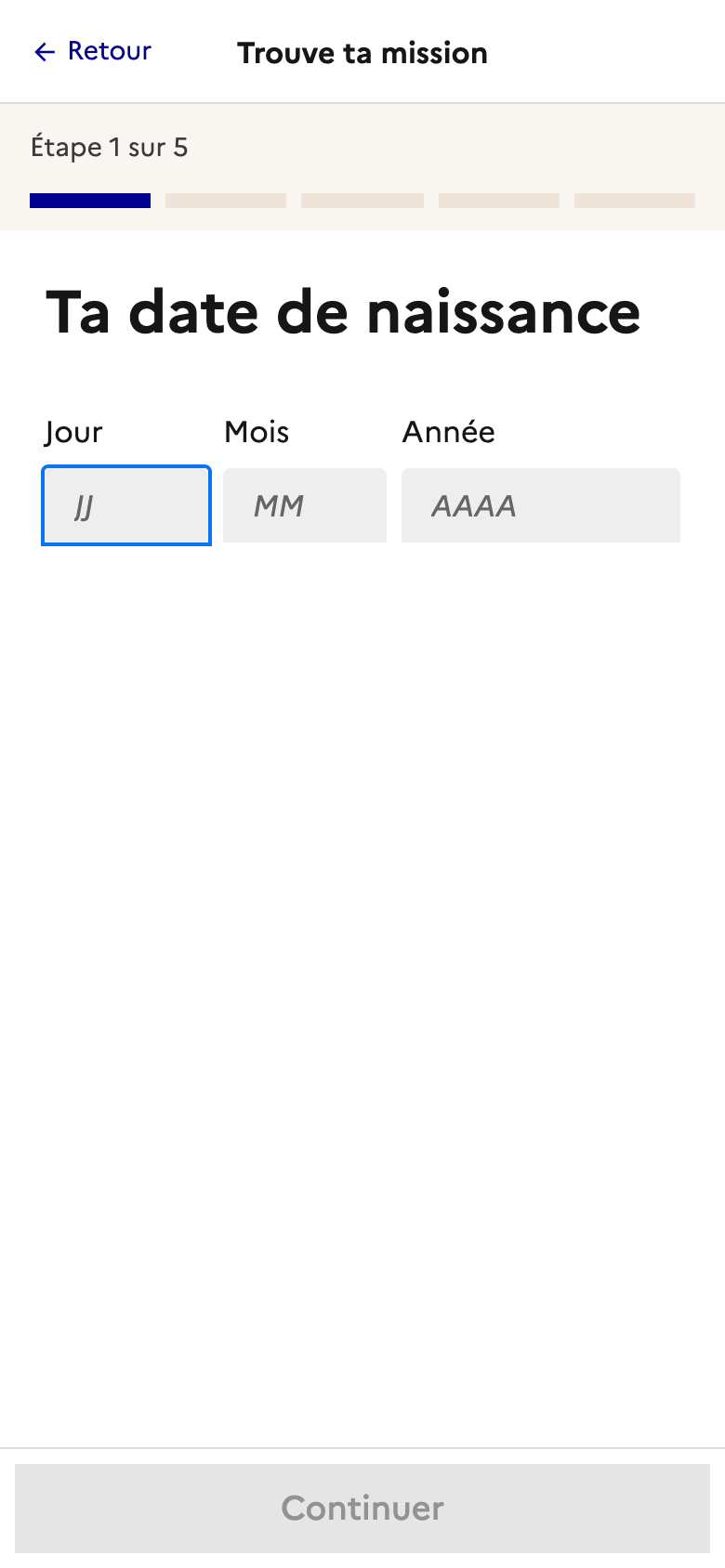
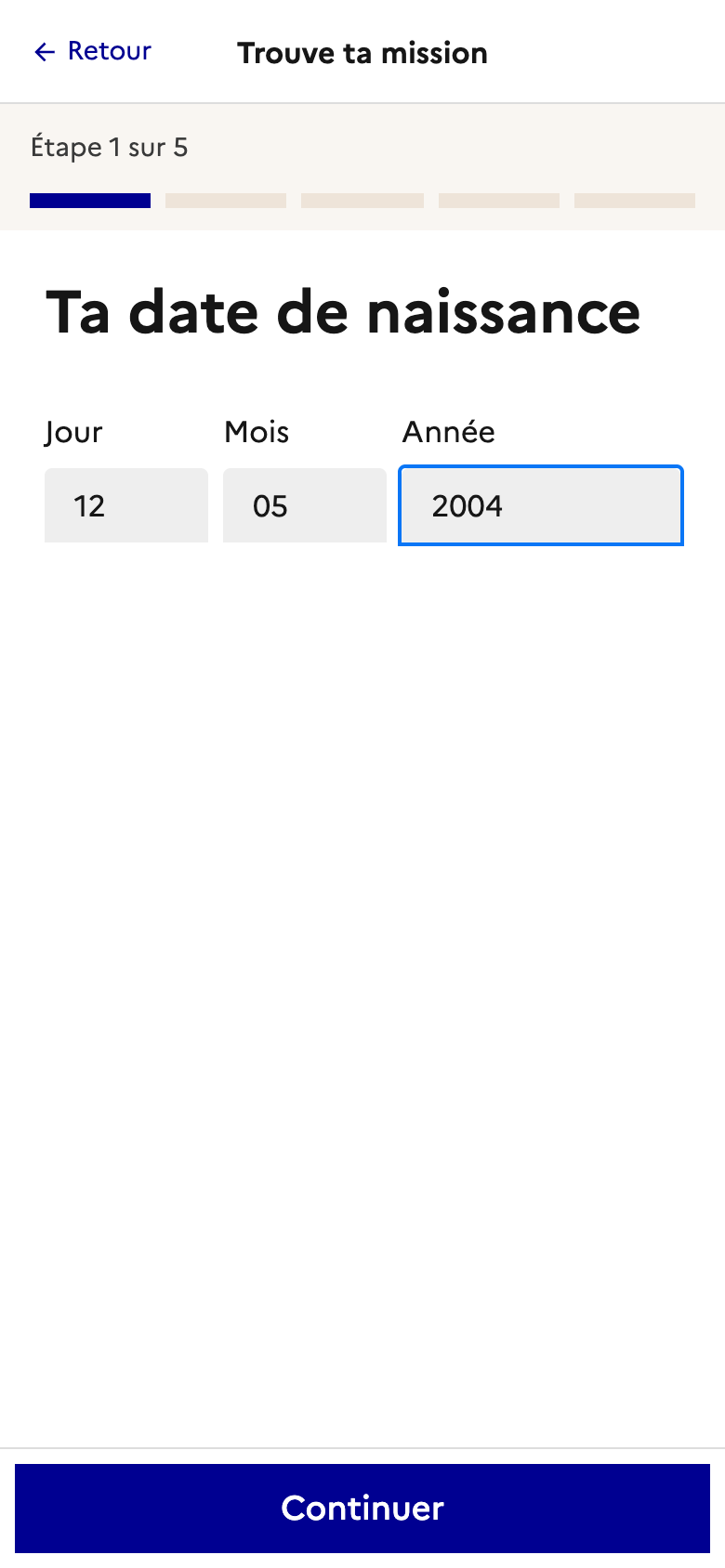
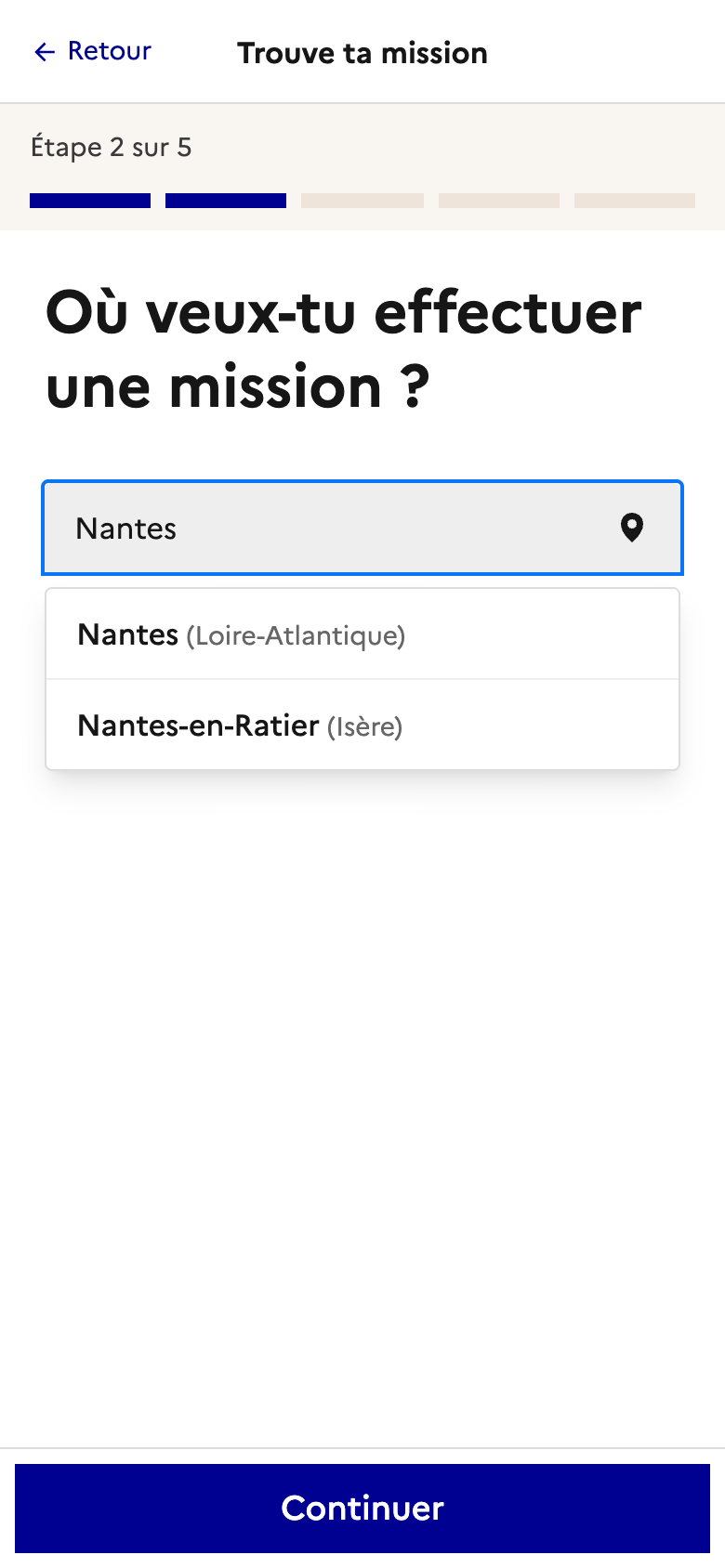
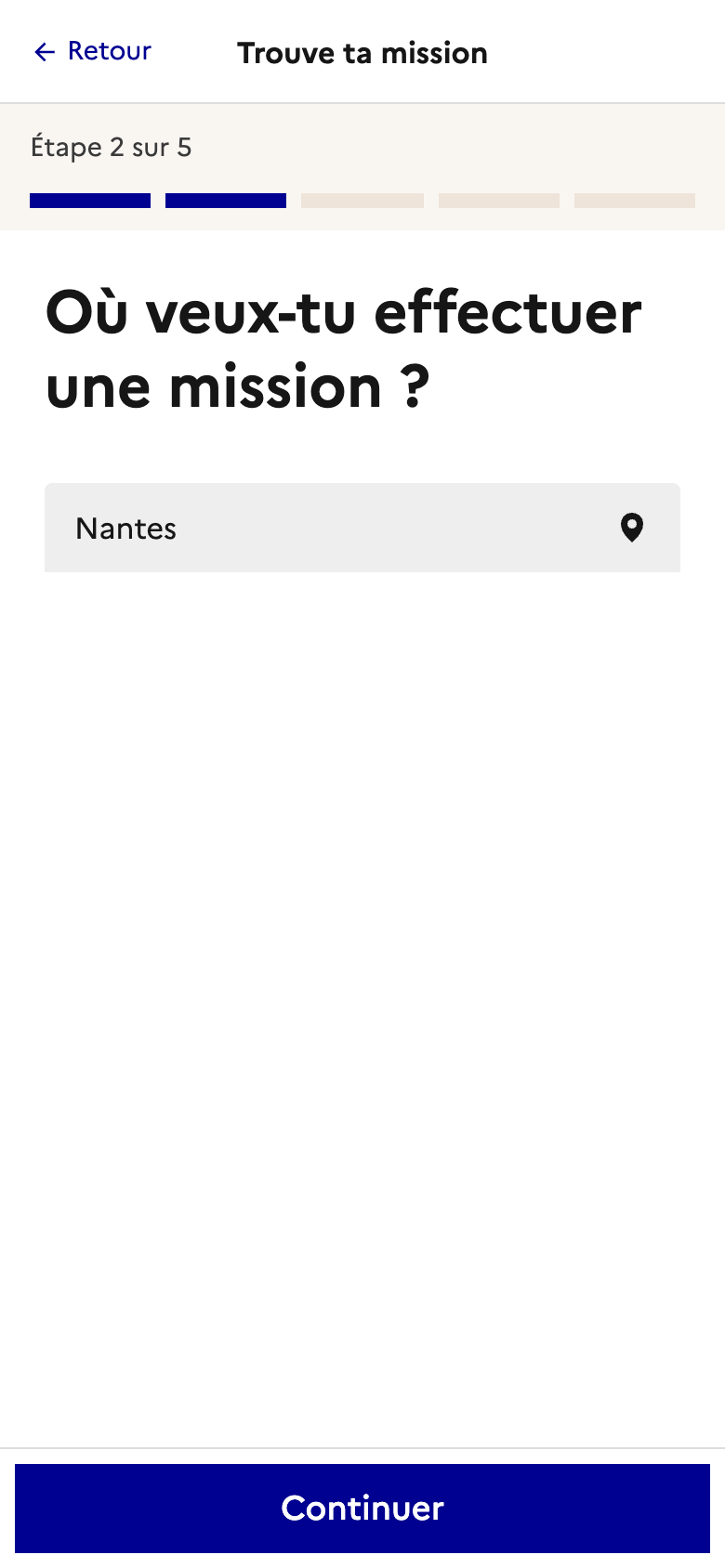
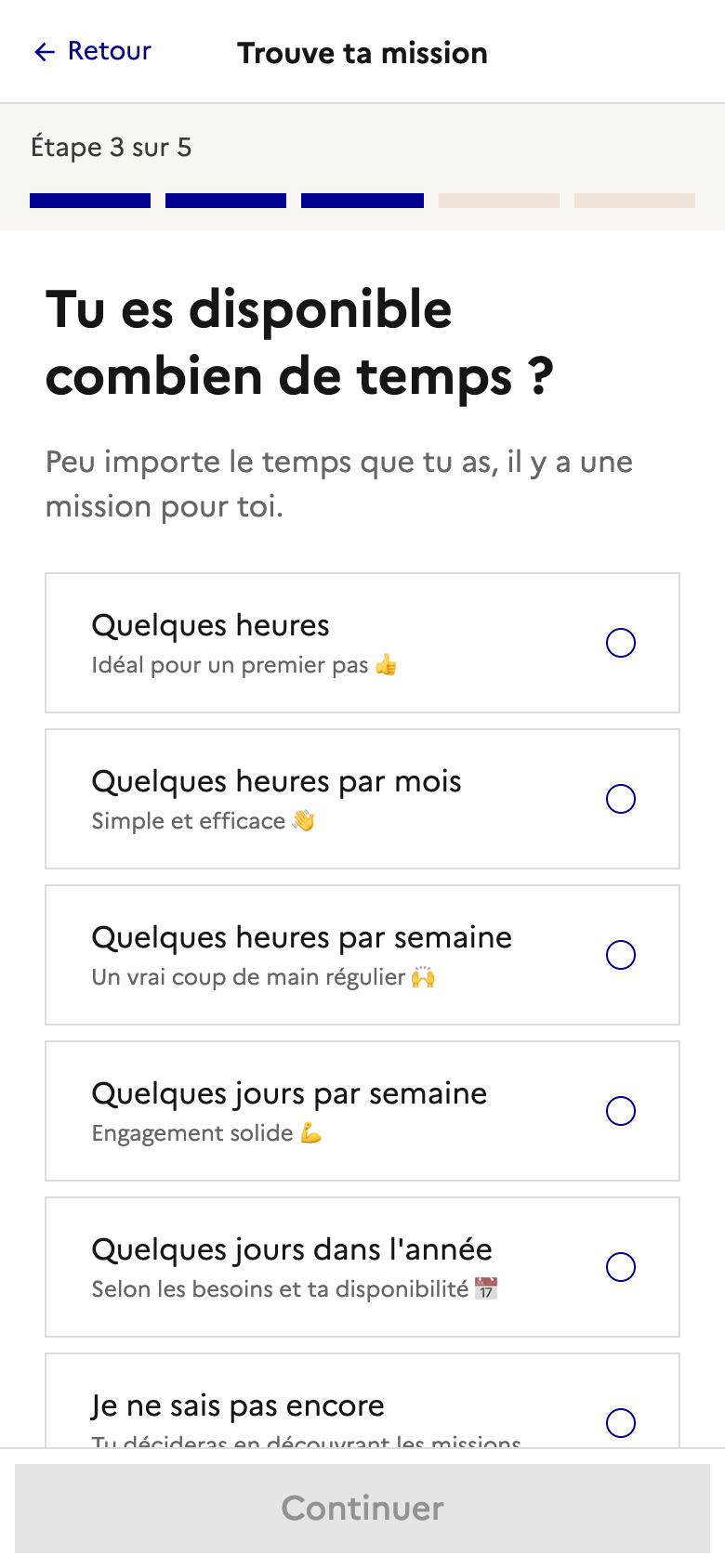
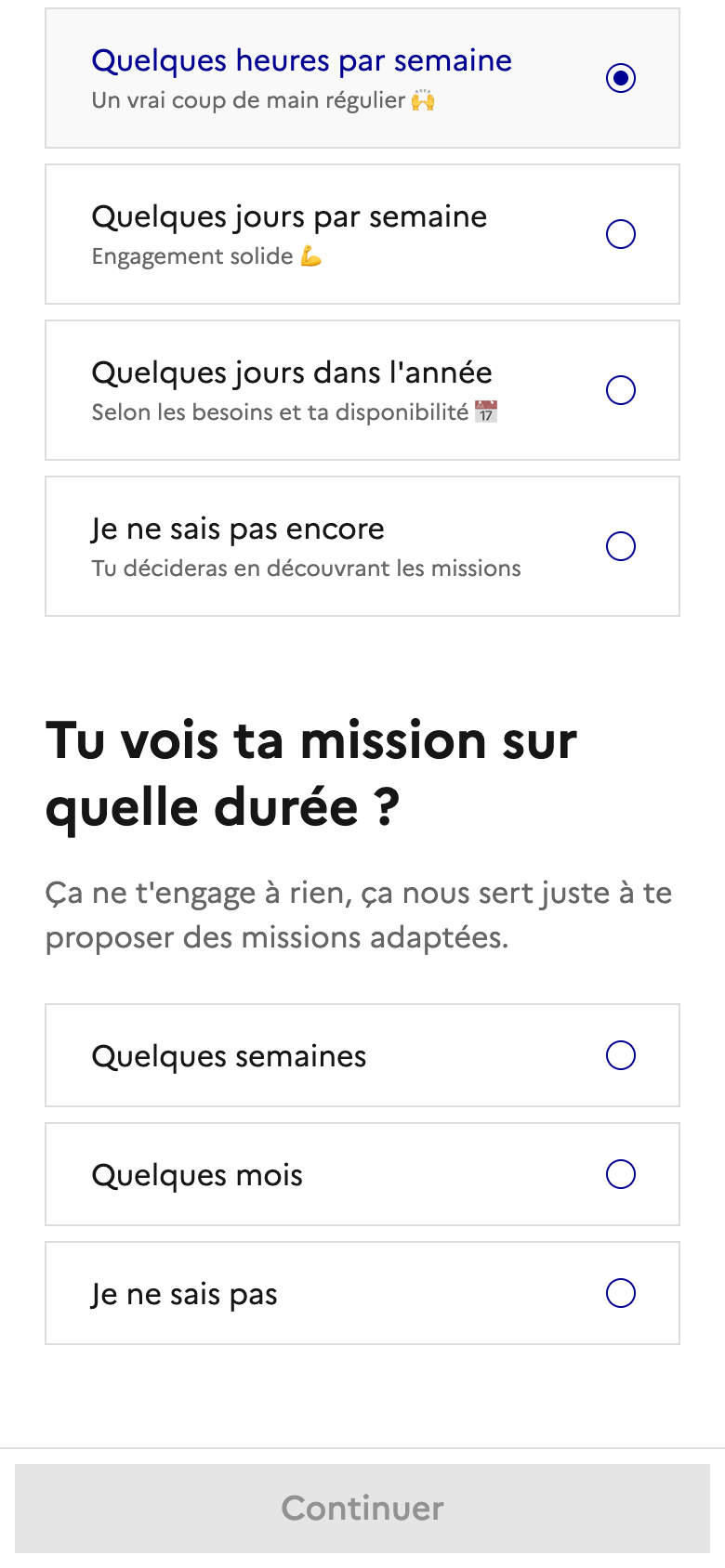
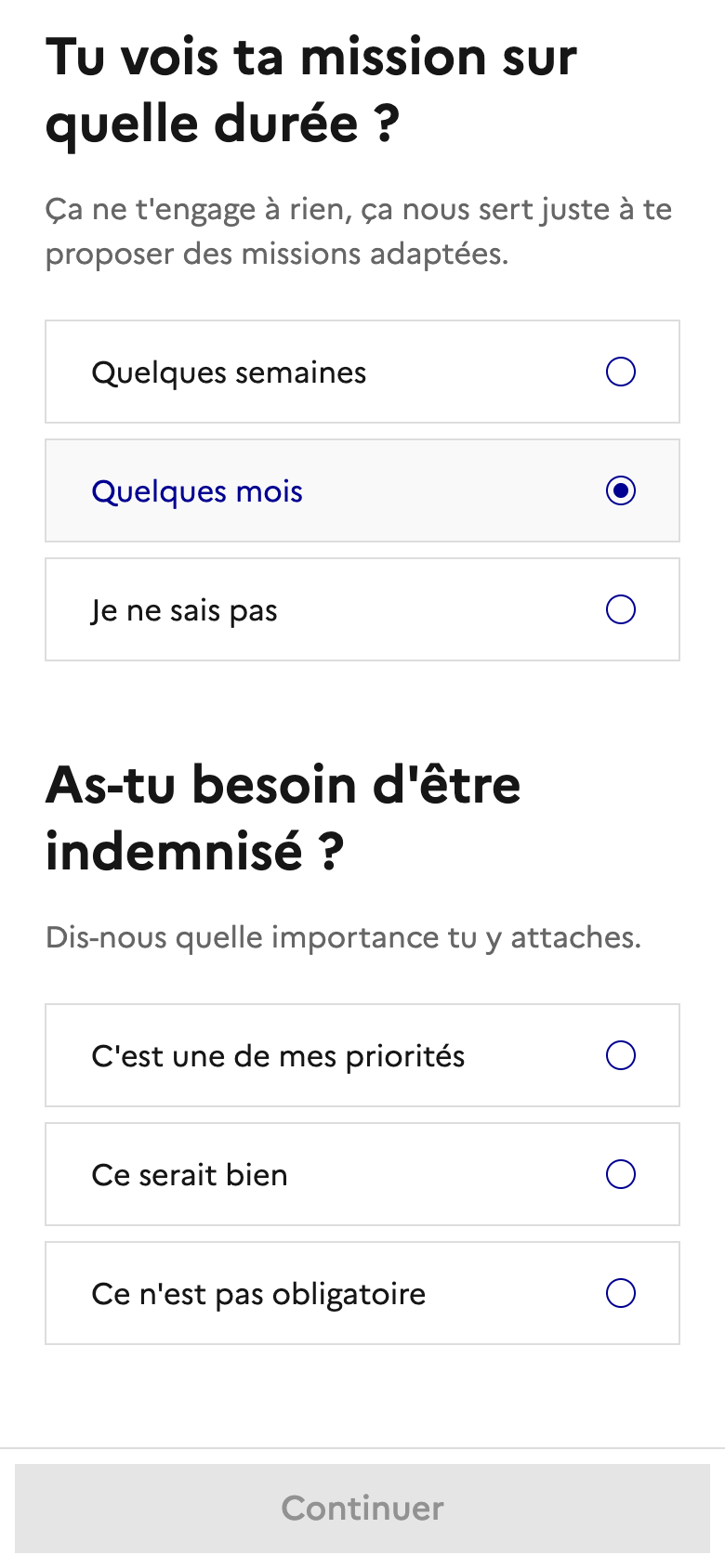
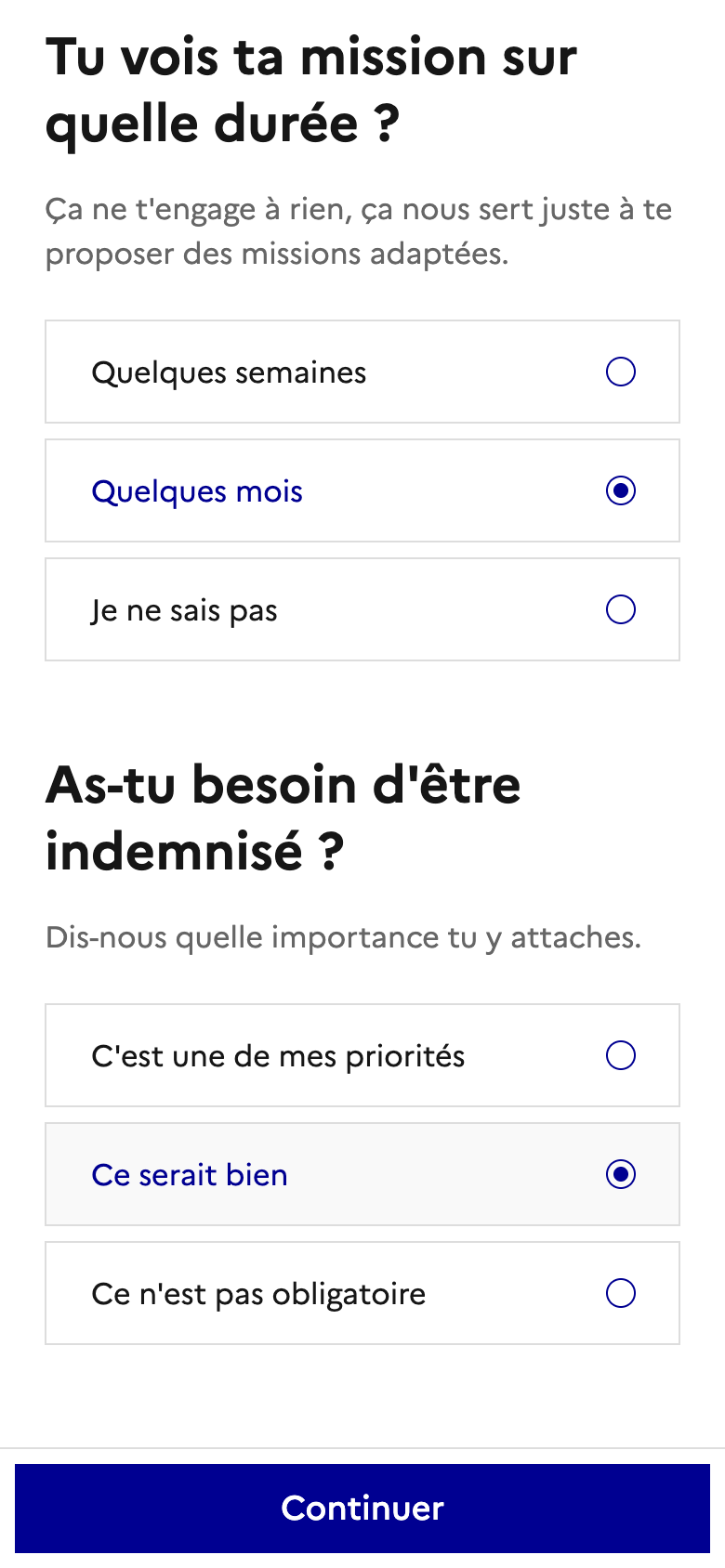
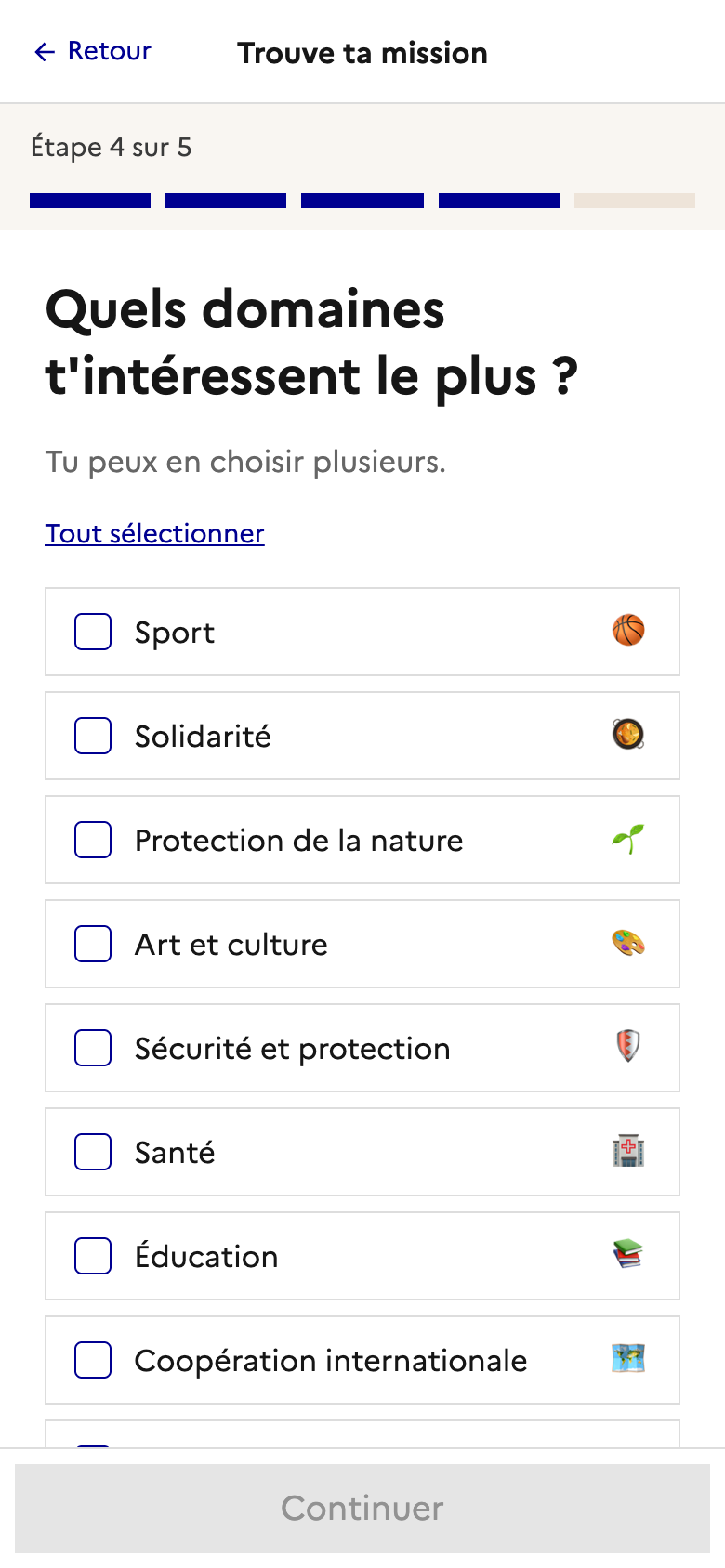
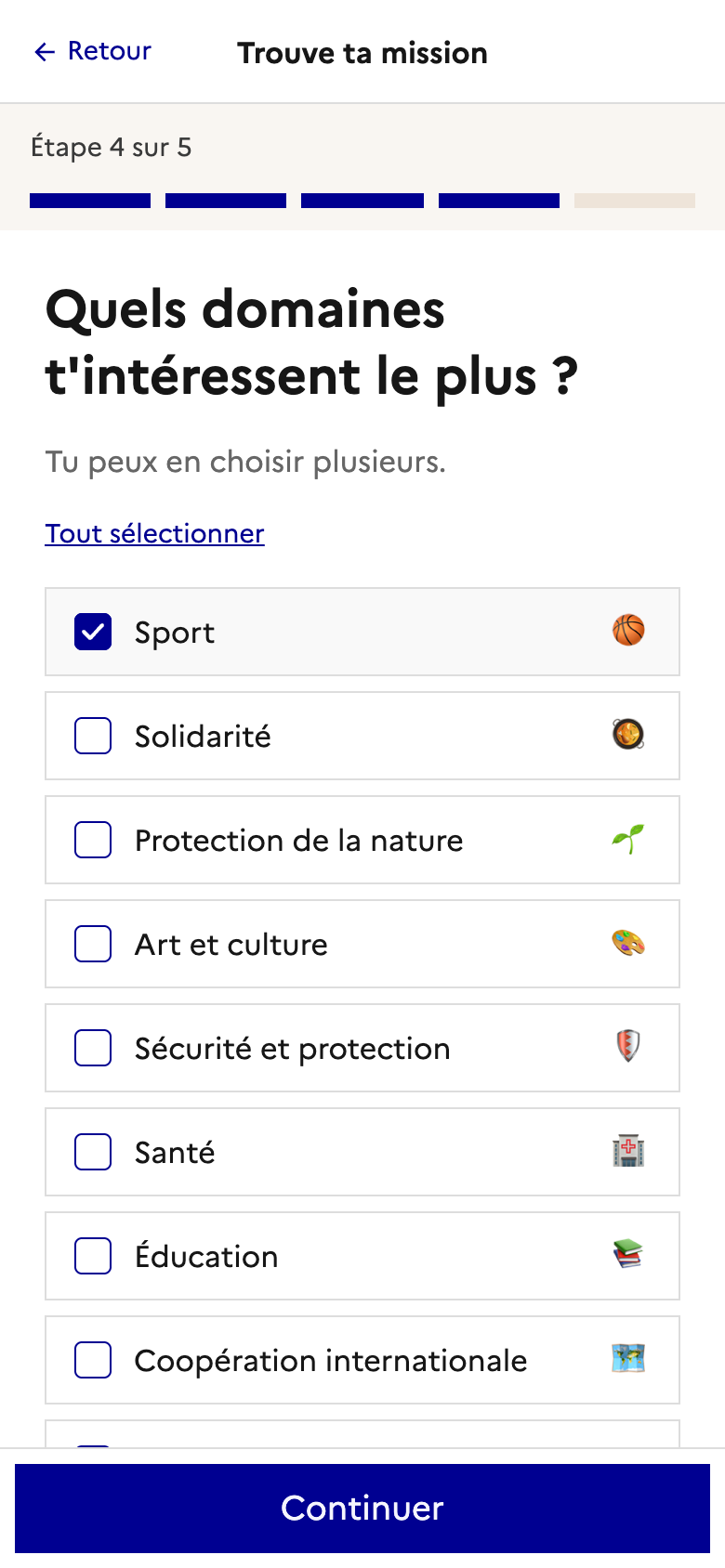
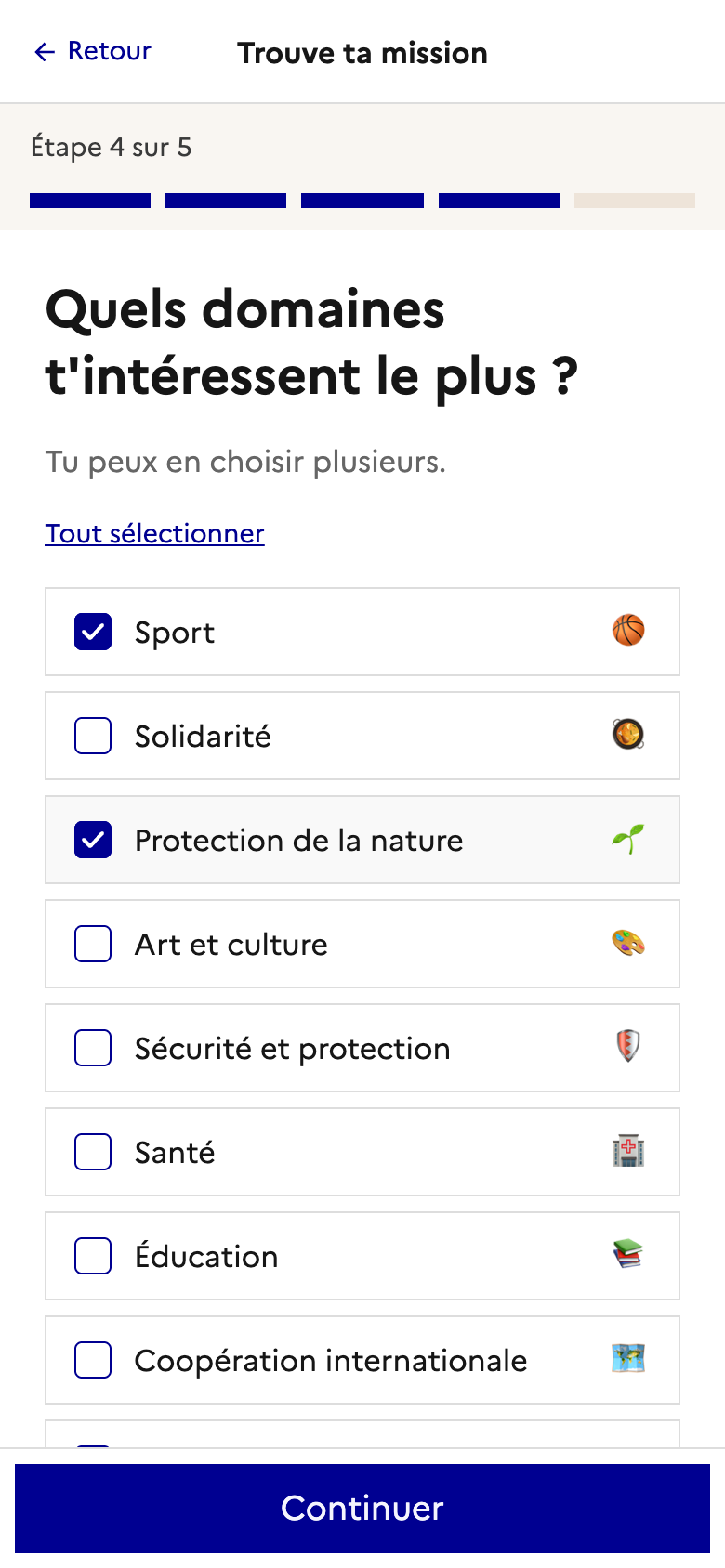
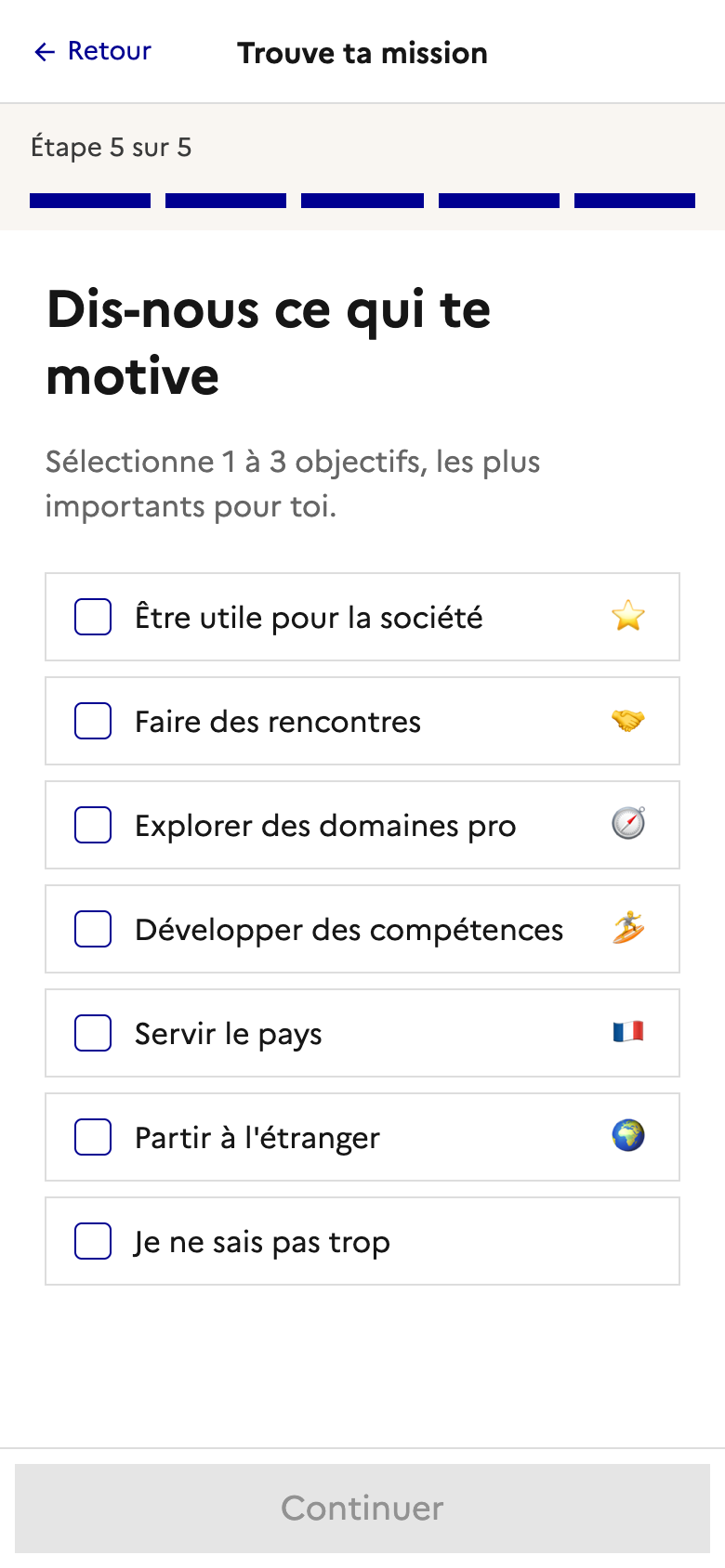
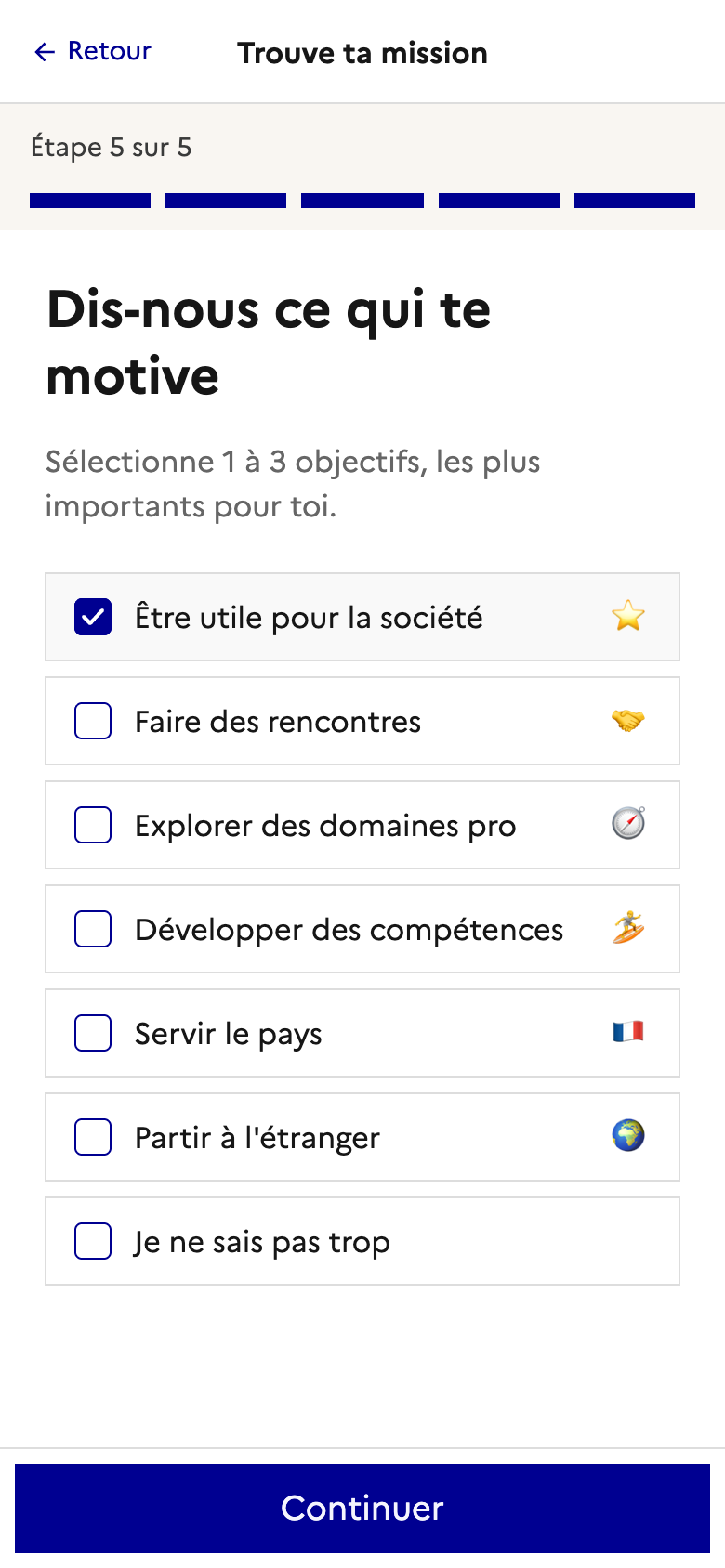
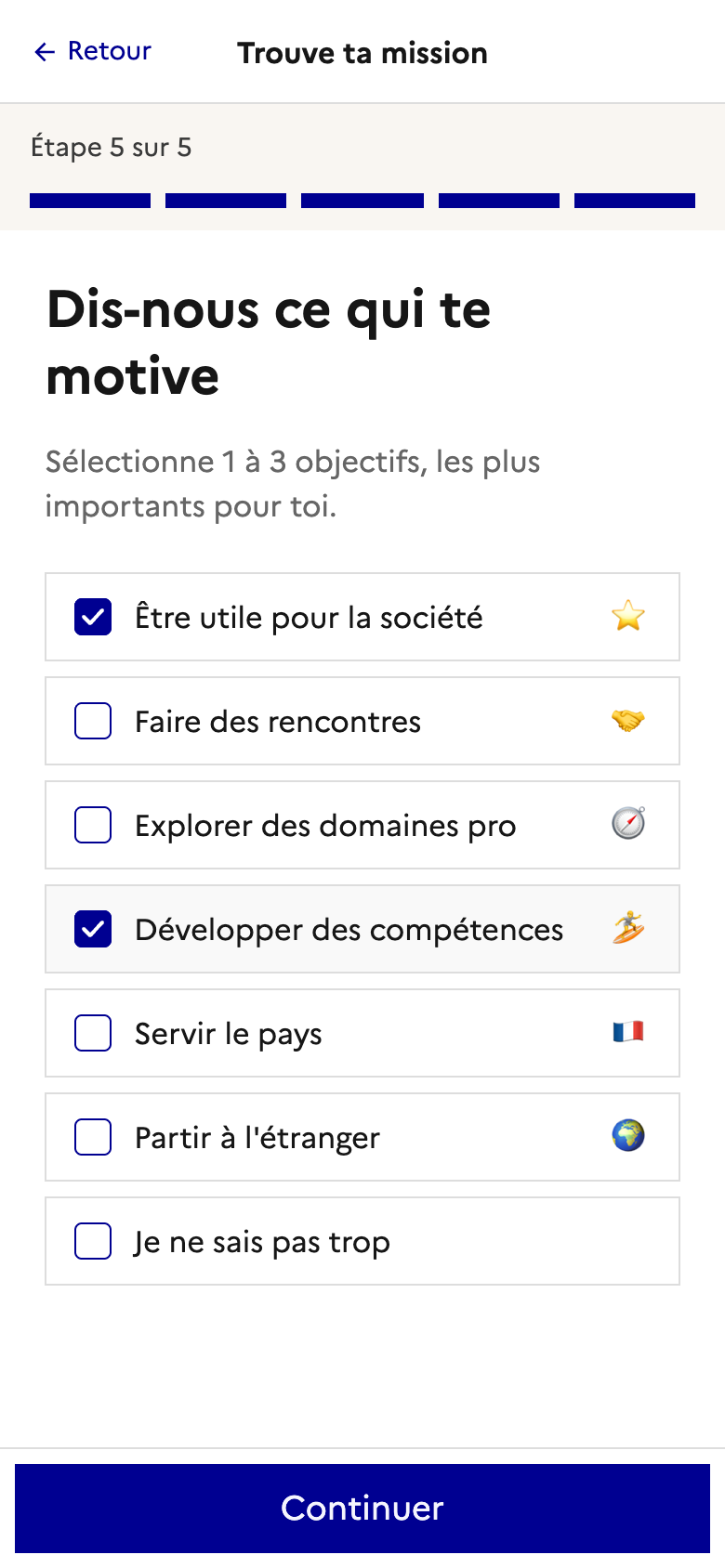
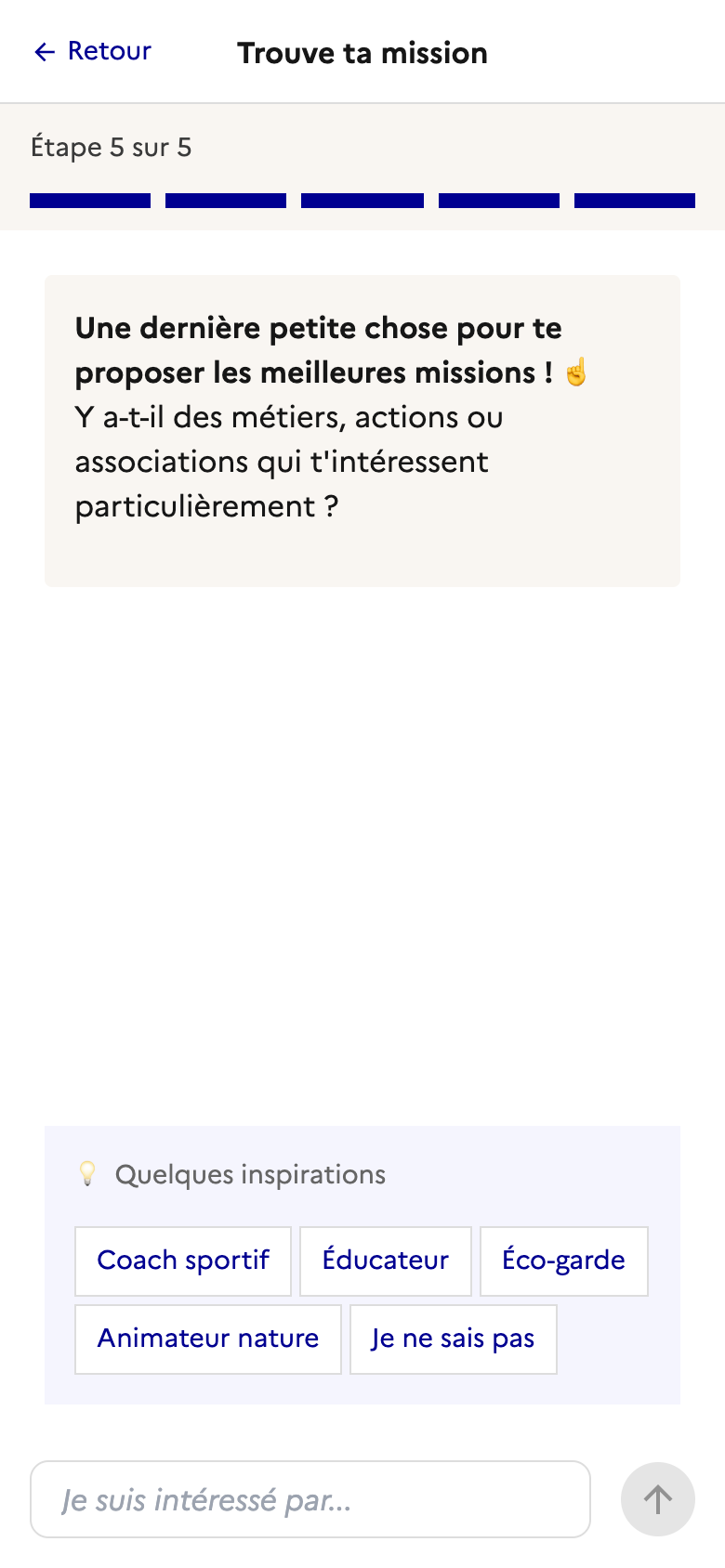
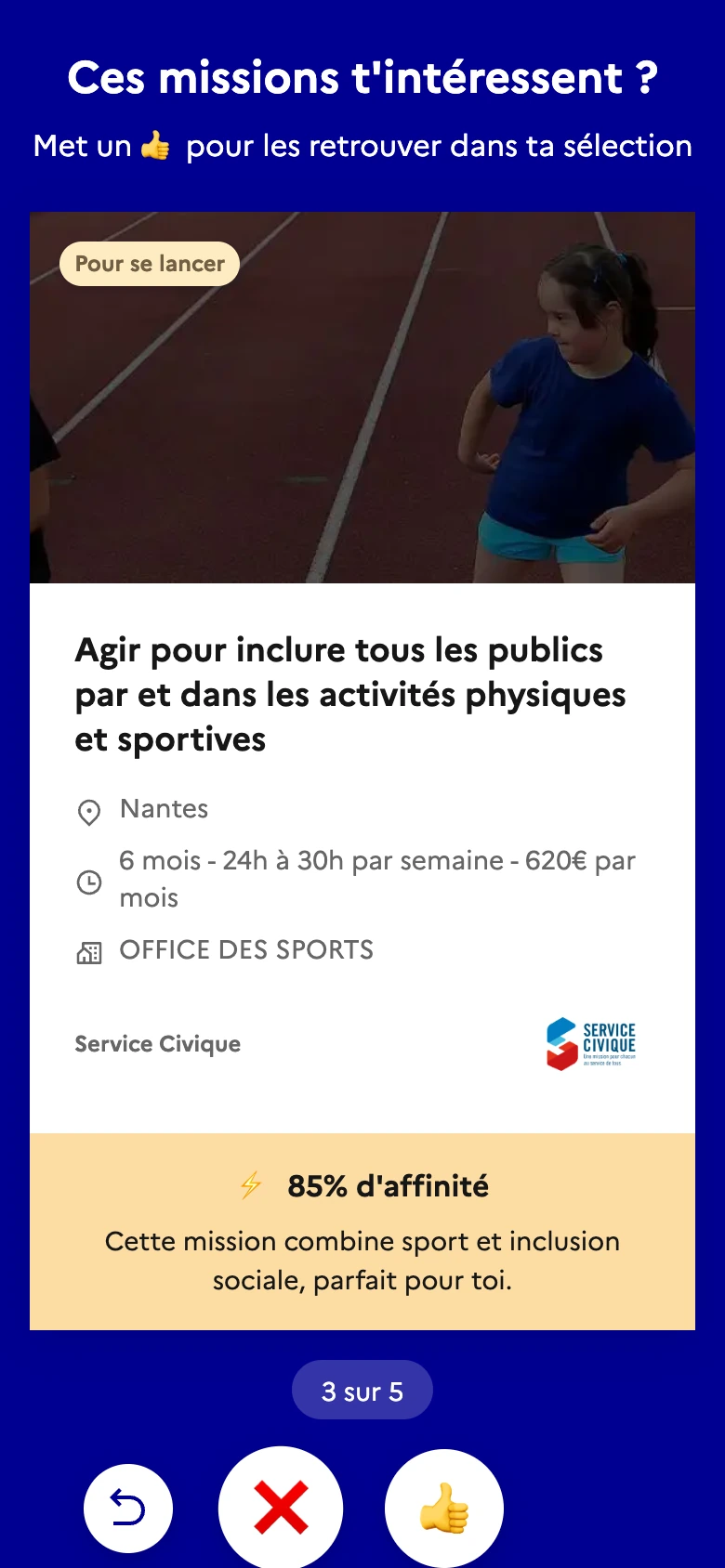
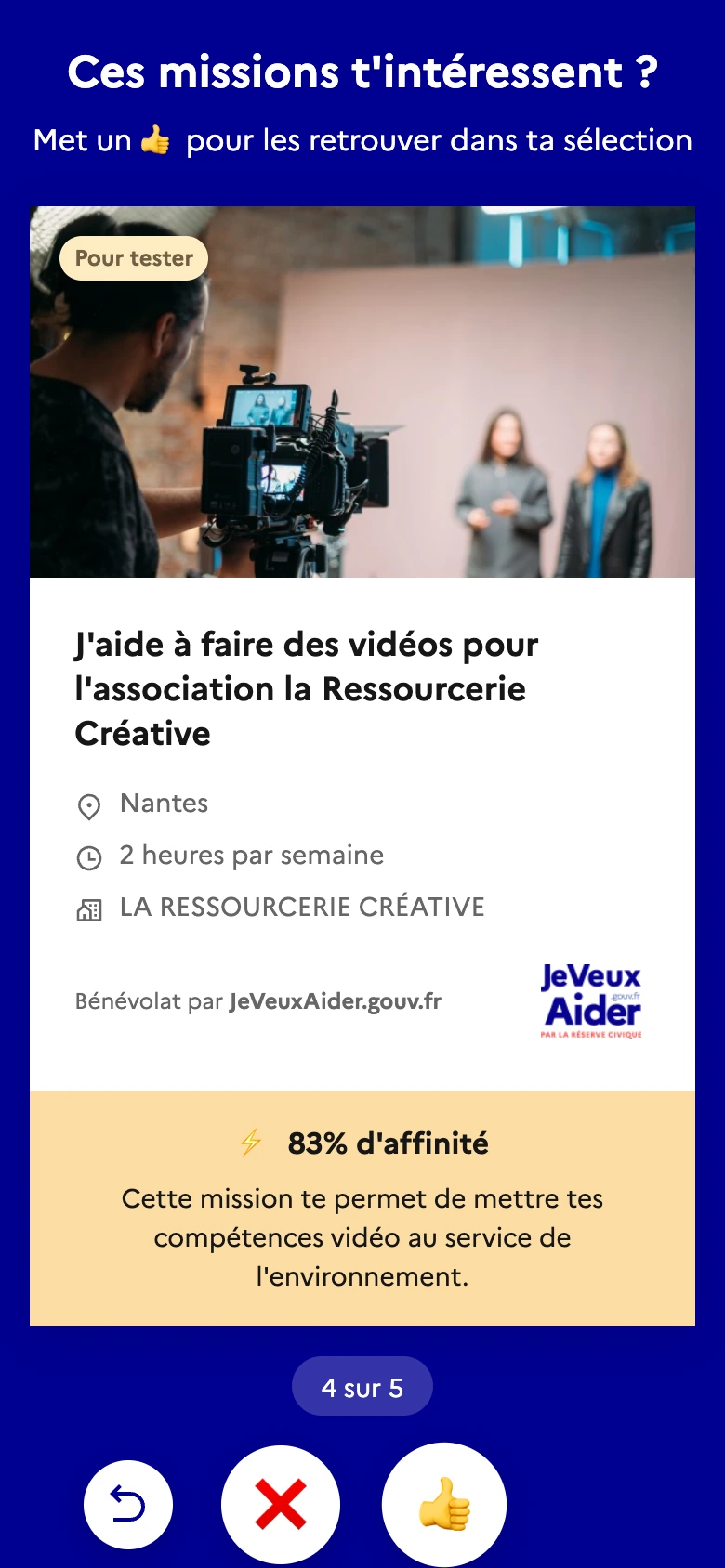
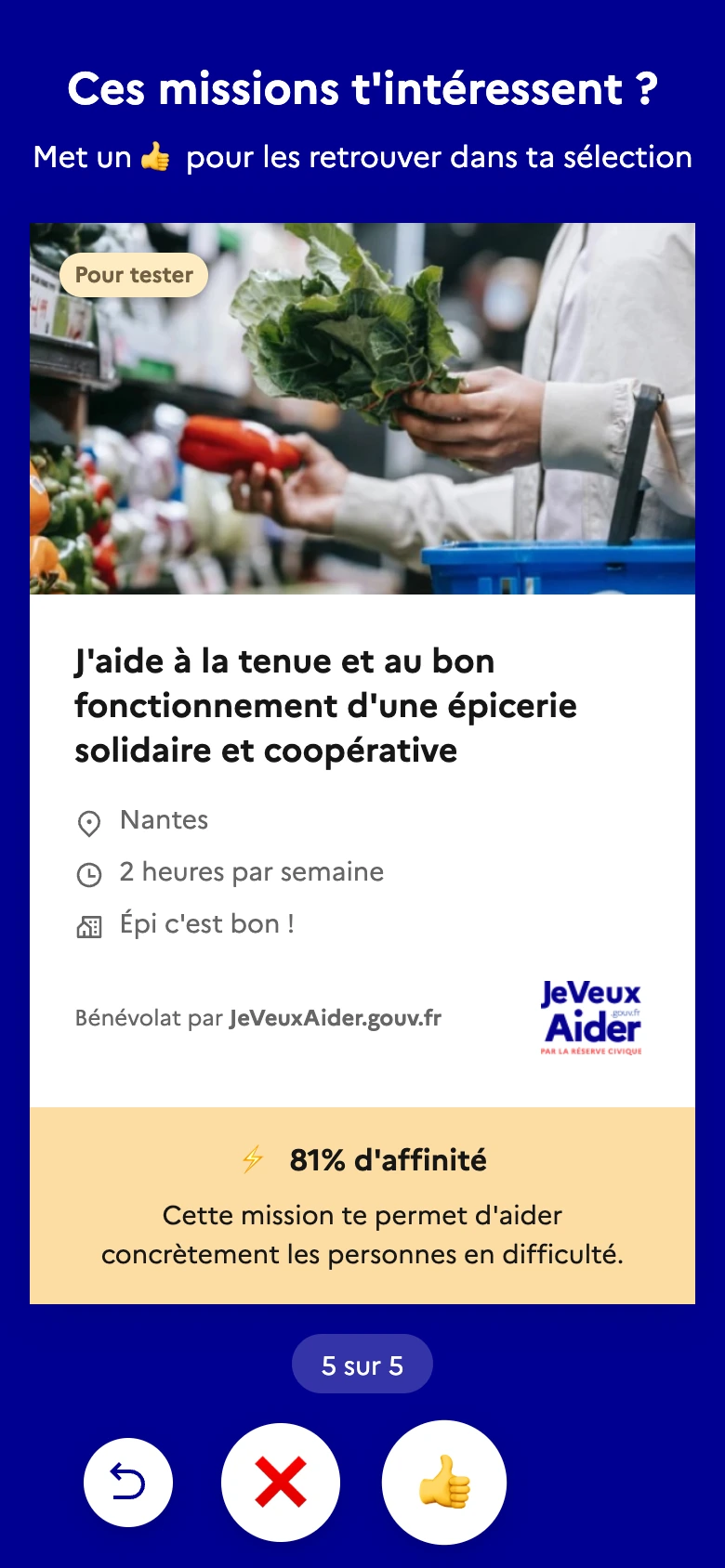
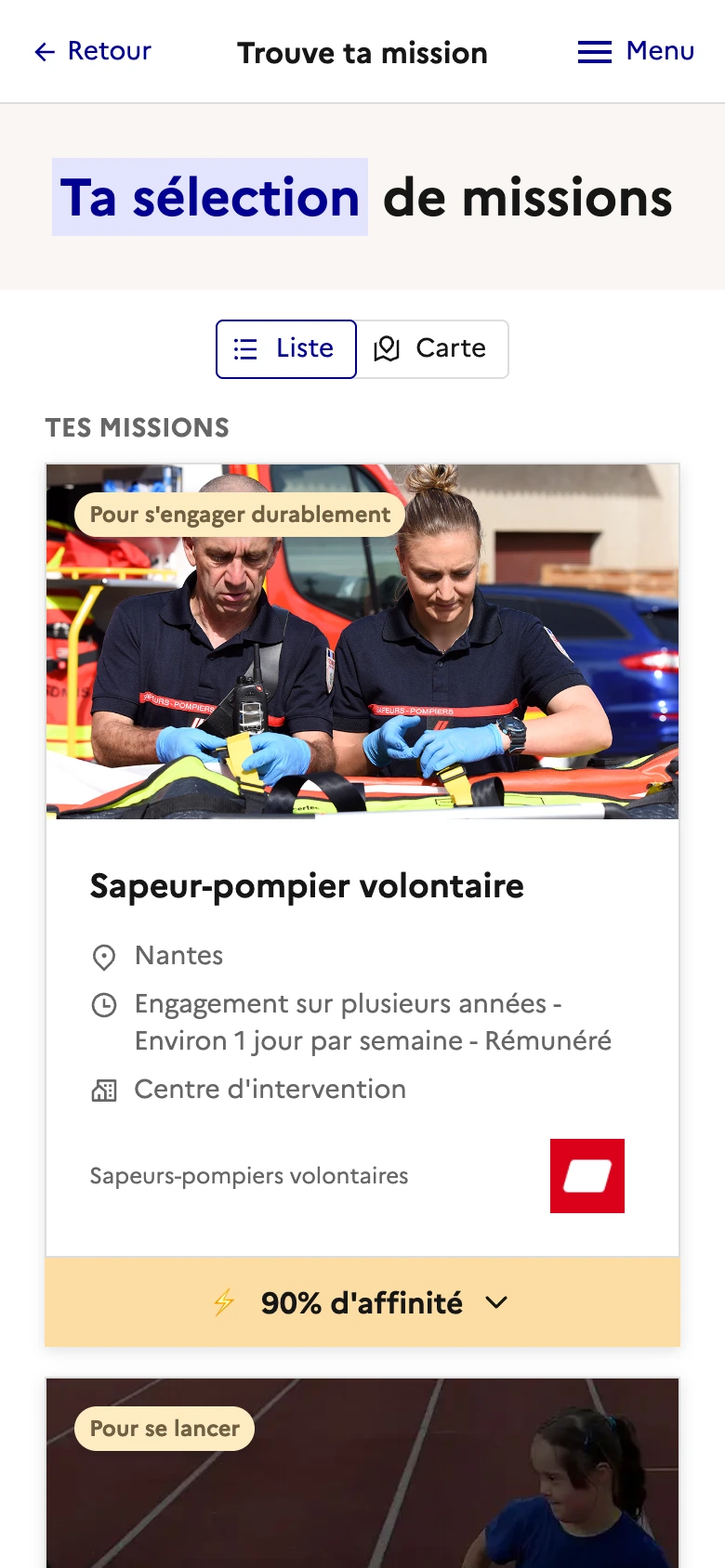
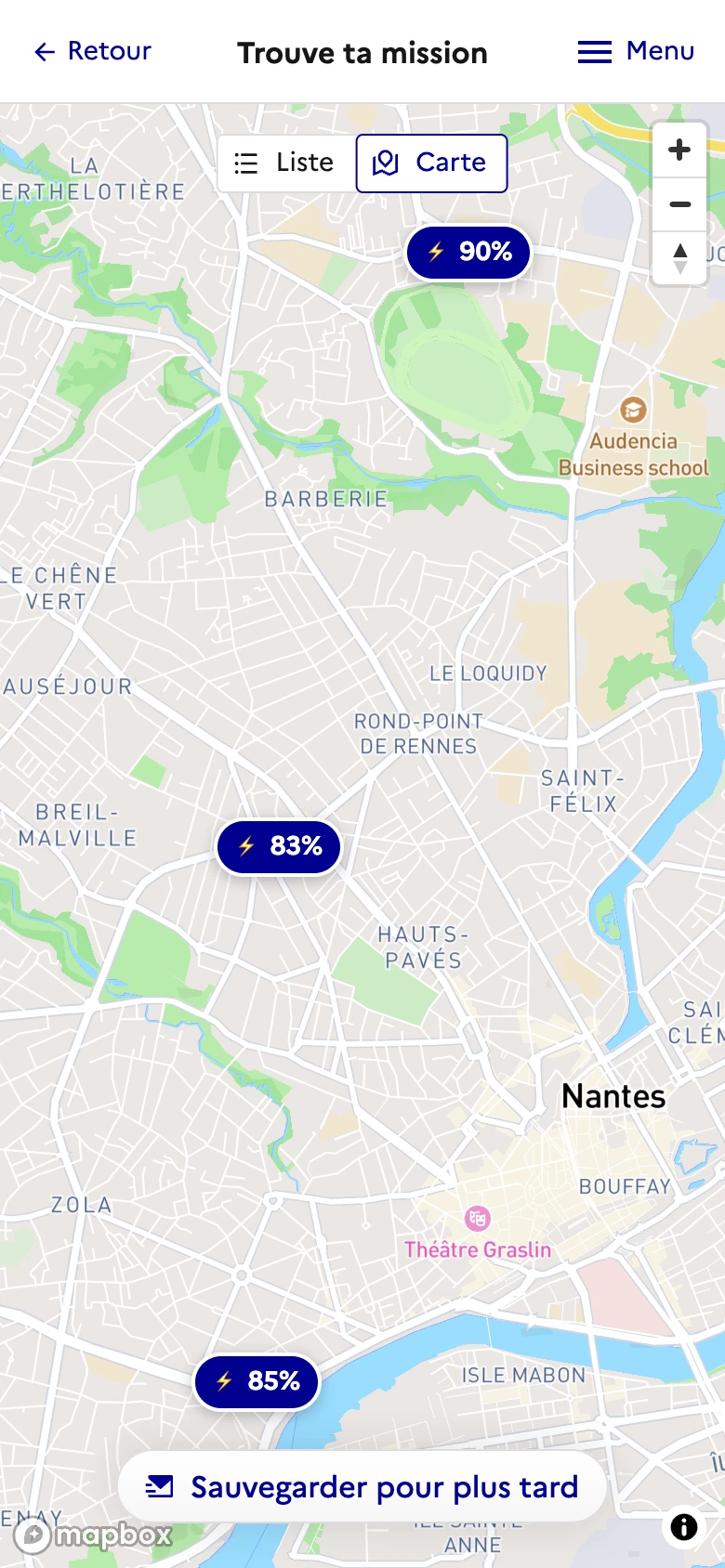
I designed and built a working mobile prototype of this vision with Lovable, with a journey that adapts to each young person’s answers. After a few questions (age, location, availability, interests, motivations), they get a selection of missions from every engagement program, each with an affinity score.


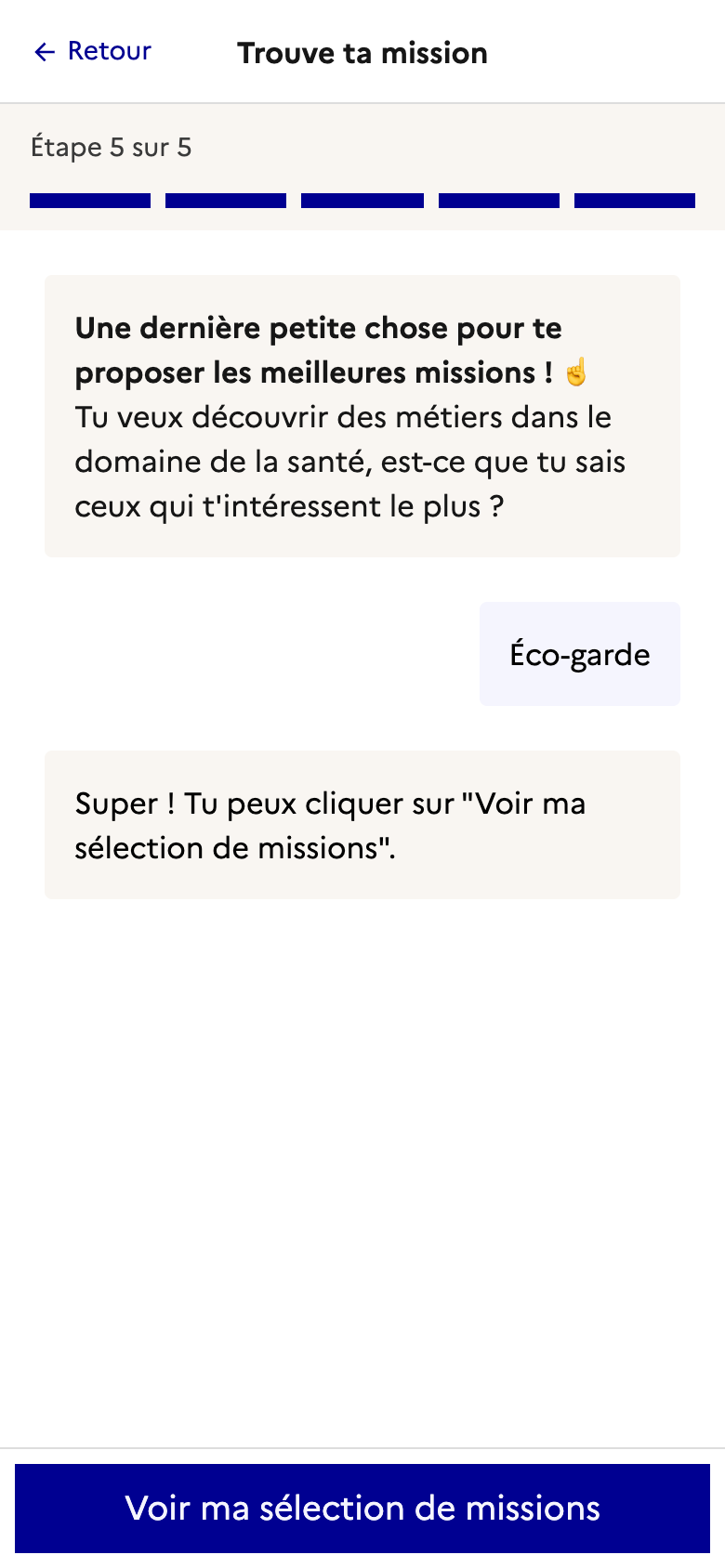
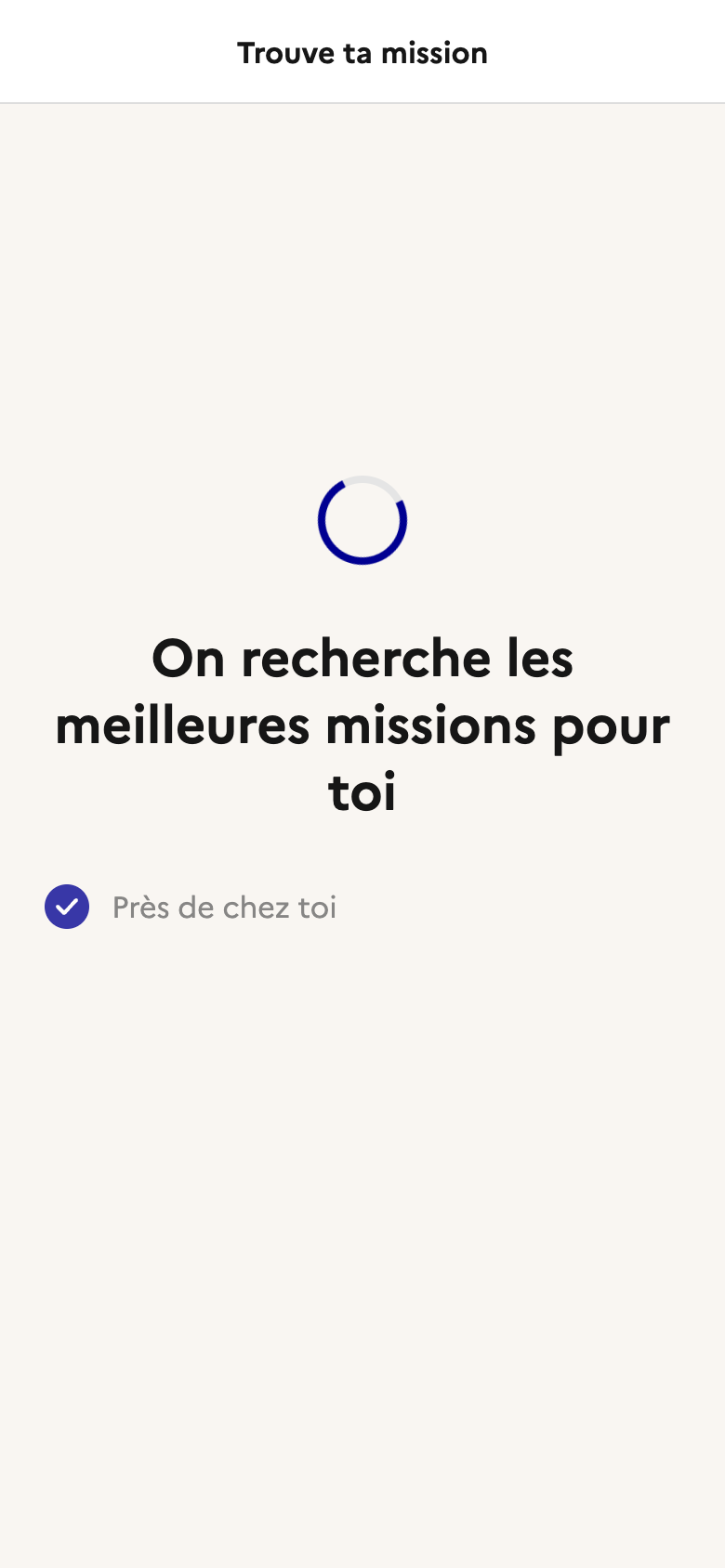
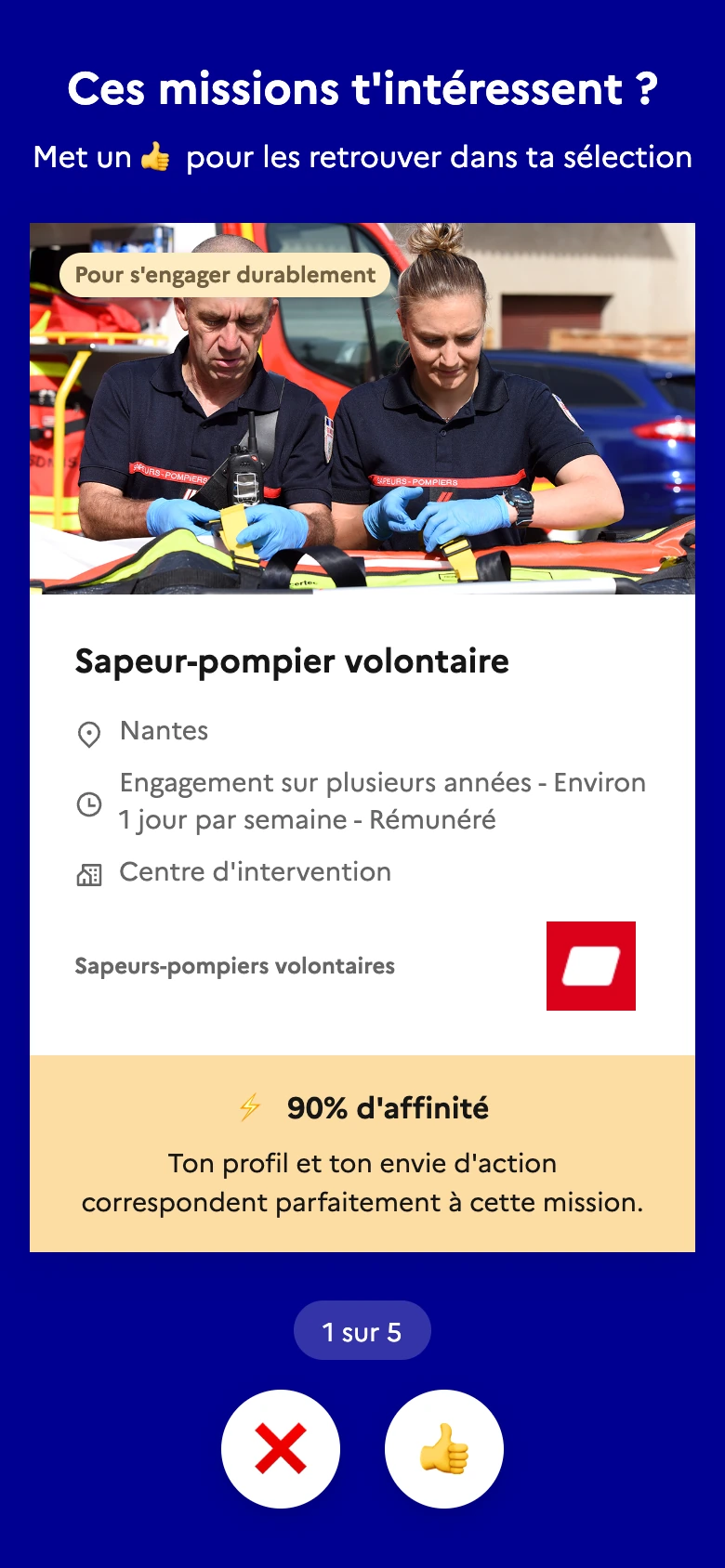
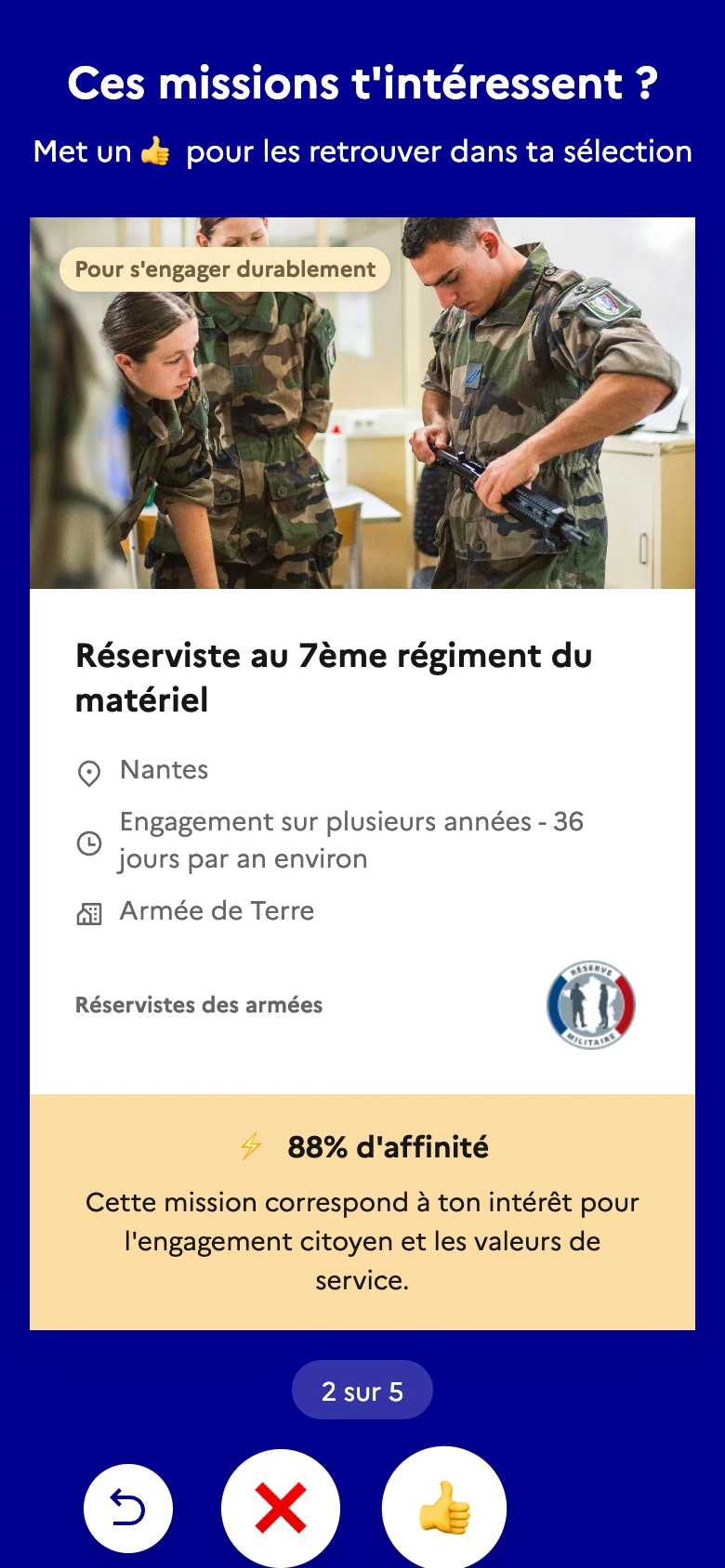
20
user tests
10 young people and 10 mentors
The test feedback shaped the first iterations, before the MVP was built:
- AI moves out of the questionnaire and into the recommendation engine: the AI’s question was poorly understood and slowed the experience down a lot;
- Tinder-style swiping is gone: too long, and not that useful for refining the results after all;
- adjusted wording, especially around compensation.
What now? After the vision, the MVP
These learnings laid the groundwork for the MVP of the public engagement platform, built after I left as part of a project launched by the DJEPVA (the French government directorate for youth and civic life).